
In computer science, there is a graph algorithm called Breadth-First Search (BFS). One intuitive way to understand it is to imagine a graph with one node on fire. With each iteration, the fire spreads to adjacent nodes. It moves layer by layer: first to the nearest nodes, then to the next-nearest ones, and so on.
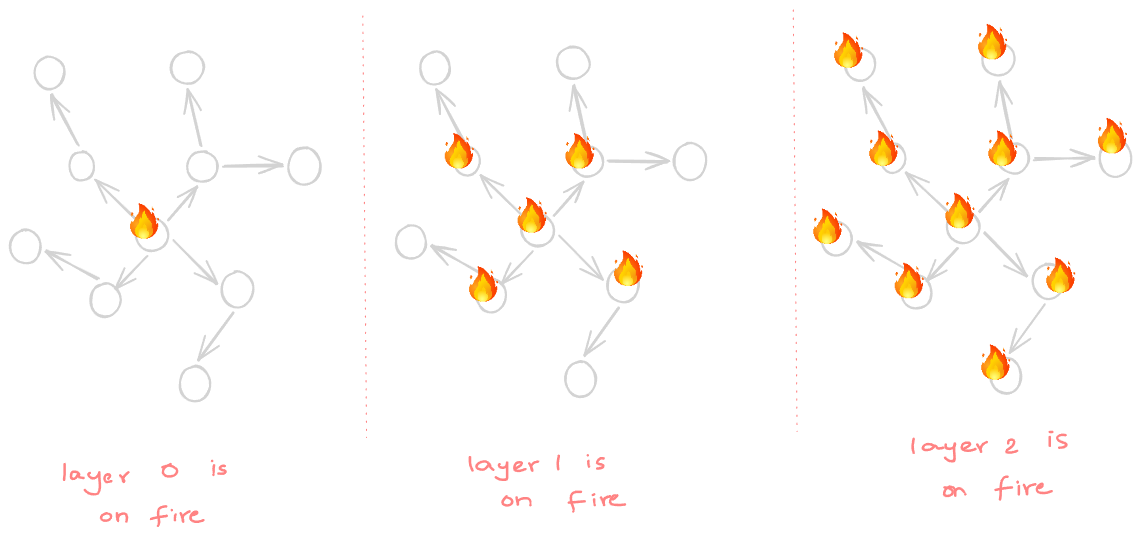
I believe sin can spread through our lives in a similar way. A sin that begins in one area may create the need for other sins to sustain, conceal, or defend it. Those sins can then affect other parts of a person’s character, relationships, and life. Sin rarely exists without consequences beyond the area in which it began.
Consider a wife who is cheating on her husband. To hide the adultery, she may begin lying to him. She may become ungrateful for her marriage or resentful toward her husband. The strain of maintaining the deception may contribute to quarreling or rage. In an extreme case, the situation could even lead to violence or murder. Adultery does not inevitably cause all these things, but it can create circumstances in which other sins become more likely.
This is where the comparison with BFS becomes useful. One sin is connected to another through its consequences. Sin can spread from one part of life to another, layer by layer.
What is sin, and what constitutes it? I am sure everyone has their own boundaries regarding what they consider sin. Some might say lying is a sin, while others might argue that we cannot go through life without occasionally lying. Some might say murder is a sin. Well, I assume we all agree on that. Although people may disagree about the seriousness of particular sins, my personal framework includes the following:
Sexual immorality, adultery, orgies, murder, cruelty, brutality, theft, deceit, slander, gossip, lying, greed, covetousness, love of money, selfish ambition, arrogance, boastfulness, conceit, hatred, envy, jealousy, malice, strife, quarreling, rage, dissension, factionalism, disobedience to parents, lack of natural affection, ingratitude, treachery, drunkenness, gluttony, reckless living, senselessness, and lack of self-control.*
This list includes actions, habits, attitudes, and desires. People dont consider all of them to be equally serious, and people may agree with some while disagreeing with others. I agree with all of them, and I am ashamed to admit that I am guilty of some of them myself.
I often use this framework when judging how closely to associate with someone. When I see a person lying repeatedly, for example, I tend to keep my distance. Repeated lying does not prove that the person is guilty of every other sin on the list. However, it may suggest that another behavior is being concealed or that the lying has already begun affecting other areas of the person’s life. Being close to such a person could therefore bring trouble into my own life.
In my view, people generally move in one of two directions: they are either trying to resist sin or becoming comfortable living in it, consciously or unconsciously. This does not mean that anyone is perfect. People struggle, fail, and change. The distinction is between someone who recognizes sin and tries to turn away from it and someone who repeatedly permits or excuses it.
I am not claiming that a person who commits one sin will necessarily commit all the others. Nor am I claiming that one sin immediately removes everything good within that person. My point is that sin often does not remain isolated. Sustaining one sin may require another, and the consequences of both may spread into further areas of life.
What begins in one part of a person’s life can gradually reach many others. You let one sin in, and it may begin making room for the rest.